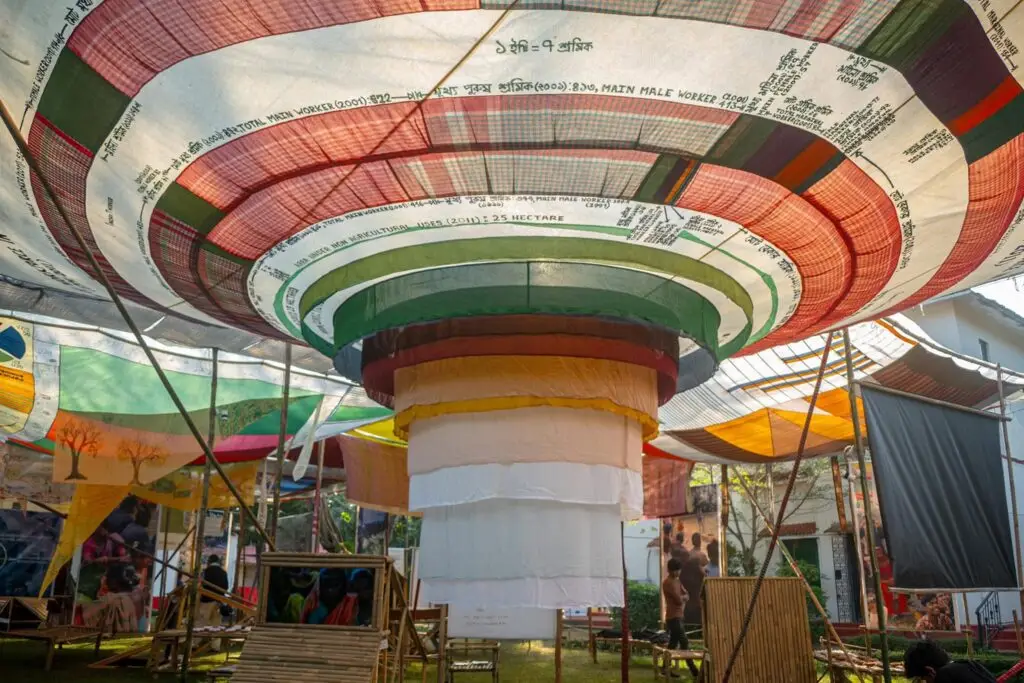
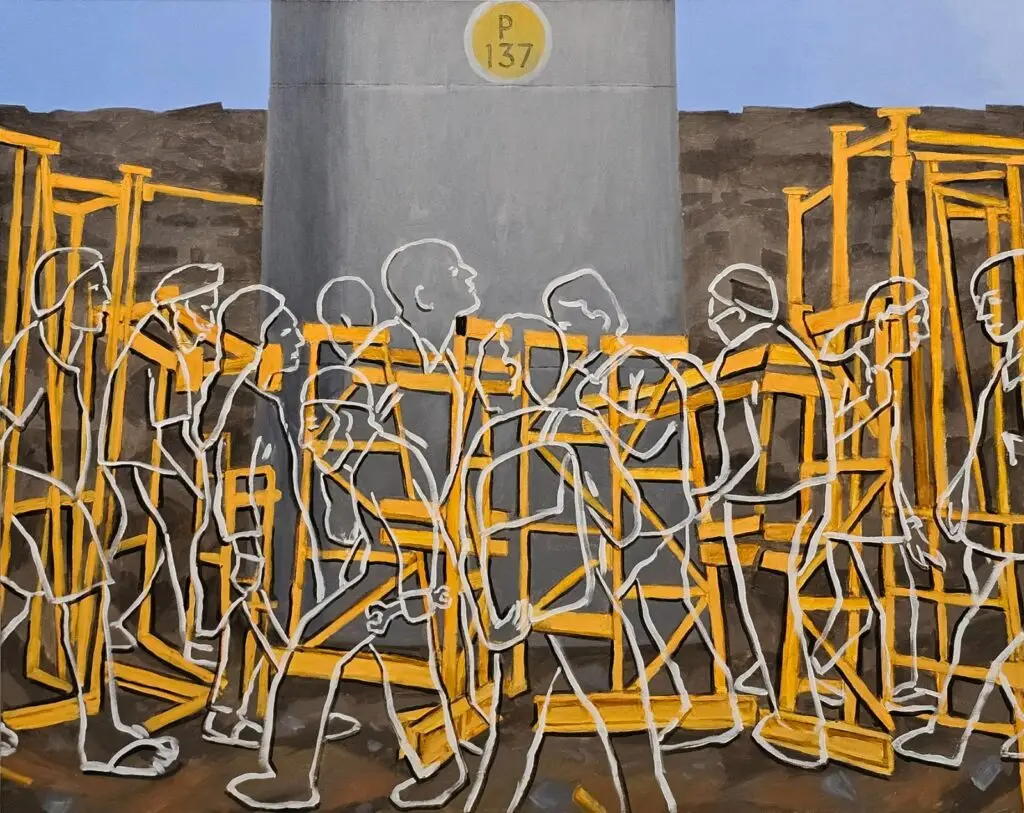
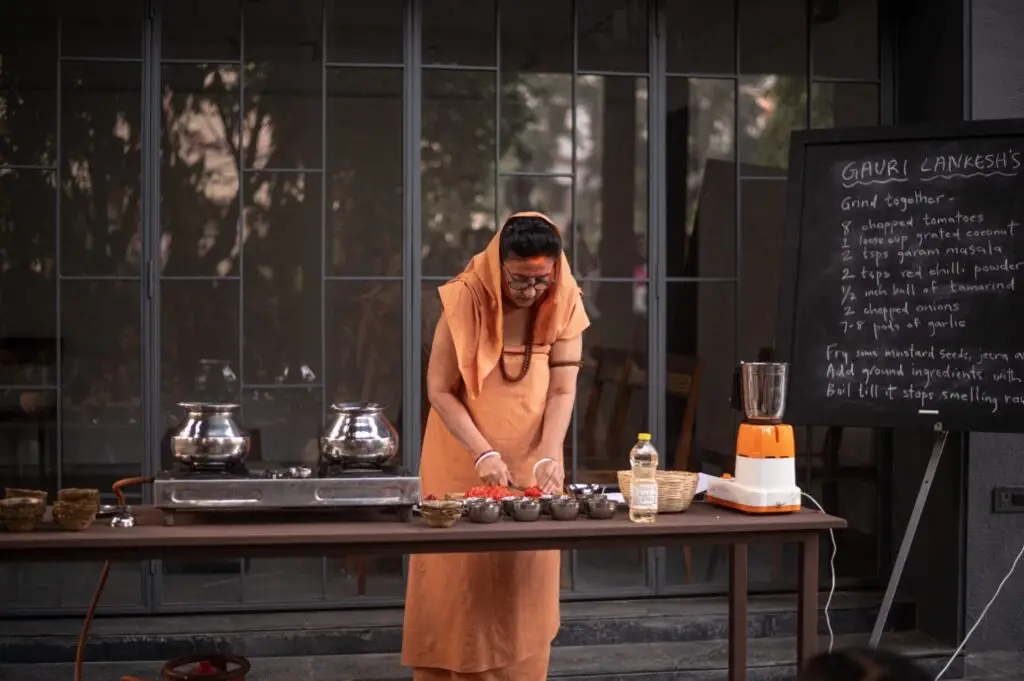
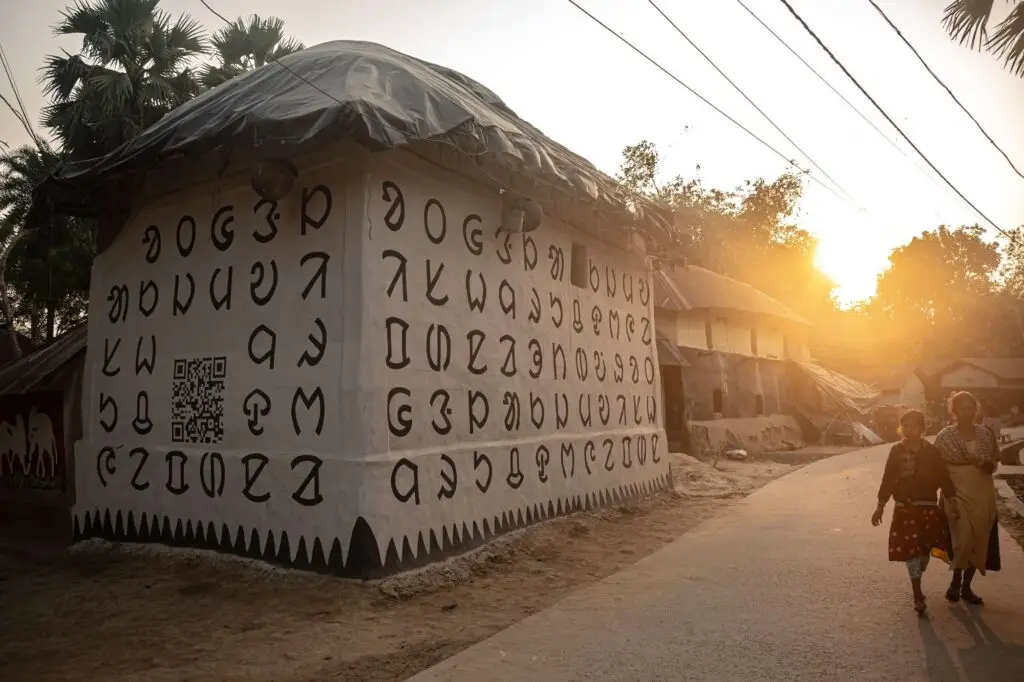
Referencing both Jibananda Das’ poem Banalata Sen and the untended vines of the forest, Banalata unfurls in plural, wild, and resilient ways across Kolkata and Santiniketan. Finding our way across Bengal, Southeast Asia, and beyond in the “darkness of midnight” (“নিশীথের অন্ধকারে”) like the sea-journeying protagonist in the poem, we are weary and depleted from the incessant waves of injustice, genocide, and grief battering us.
Absence surfaces as redacted files, unmarked graves, dried rivers, and bodies that never enter the count. Gendered bodies vanish through engineered means. Ecologies are erased in development’s vocabulary. Silence operates as trauma carried across generations—from Partition’s unspeakable violence to contemporary sexual and communal terror. It is also a strategic withdrawal; under authoritarian listening, where speech is monitored and dissent criminalised, silence becomes a language of survival for minorities. Loss remains unresolved and continuous—cities reduced to rubble, families disappeared in Gaza. This is loss without closure, where destruction outpaces mourning and extinction leaves no space for memorial. Ignorance is produced as power— dissent is drowned in noise, reduced to superfluous data, or dismissed as disorder.
In an increasingly violent and senseless world, Bengal Biennale’s second edition returns to the roots of integral questions: Why a Biennale at all? For whom? Banalata holds the political and poetic in its forestial feelers, nurturing those marginalised even as it seeks and entwines with its allies. It finds joy in unlikely places, forming its own subterranean and subaltern network.
Against extractivism, casteism, gendered control, and policed identities, resistance appears as refusal: to forget, to vanish, to be reduced to labour alone, upholding dignity and parsing emotional strata in a nation-state which measures only output. Symbiosis emerges where survival is shared rather than singular. Queer and trans lives, long forced into precarity, model interdependence—chosen families, collective care, mutual shelter across bodies. In crisis, symbiosis dissolves the myth of self-sufficiency: it replaces isolated resilience with relational strength. Against regimes that fragment identities, symbiosis insists that living-on is collaborative—becoming together what we cannot endure alone.
Following these ungovernable vines, Banalata becomes a guide within the end-times as more than an atavistic metaphor or gendered personification. How do we tend to one another in such end-times?